Which Tucson Neighborhoods Will Benefit Most From the Raytheon and Battery Factory Job Boom?
If you read my mid-year market recap, you know Tucson's housing market has been soft this summer — prices down slightly year-over-year, homes sitting a little longer, more room to negotiate. What that recap didn't get into is why I'm telling buyers not to sleep on certain neighborhoods right now. It comes down to about 700 acres south of Tucson International Airport.
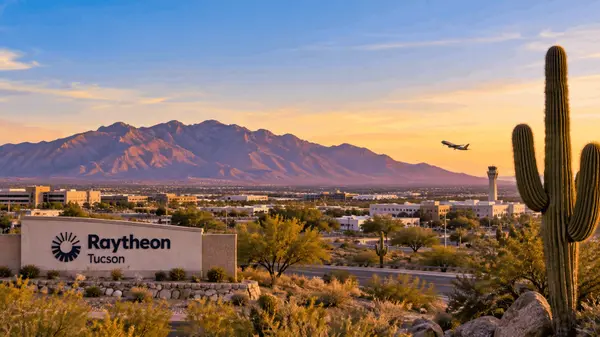
That's where Raytheon, Southern Arizona's largest private employer, and the American Battery Factory, which just broke ground on the country's largest lithium iron phosphate battery gigafactory, sit almost side by side. Together, they represent one of the clearest job-growth stories in Tucson right now — and job growth is the single best leading indicator for which neighborhoods see rising demand two to five years out.
What's Actually Happening South of the Airport?
Raytheon already employs roughly 11,800 to 13,000 people across its Tucson campuses, with its main manufacturing site at Tucson International Airport and a second major footprint at the UA Tech Park on South Rita Road. The company has publicly discussed plans to add more than 2,000 additional jobs as it ramps up production under Department of War contracts.
American Battery Factory broke ground in October 2023 on a 2-million-square-foot gigafactory on 267 acres at the Pima County Aerospace Research Campus — land that sits immediately south of the airport and directly adjacent to Raytheon's facilities. The project represents $1.2 billion in capital investment and an estimated $3.1 billion in economic impact for the state. It'll start with around 300 high-paying jobs and scale toward 1,000. As of March 2026, the company announced new offtake agreements for the plant's output, a sign the project is de-risking and moving toward full production rather than stalling out like a lot of announced manufacturing projects do.
Put simply: this is not speculative. It's an existing employer massively expanding, plus a new, well-capitalized employer standing up next door, on the same industrial corridor.
Why This Matters If You're House Hunting
Jobs don't create housing demand everywhere in a metro equally — they create it along realistic commute lines. Thousands of new and existing paychecks concentrated at one location on Tucson's south side means the neighborhoods within a reasonable drive absorb that demand first, especially the ones with family-friendly schools, new construction, and HOA amenities that appeal to relocating professionals and military-adjacent hires.
For Tucson, that points squarely at four communities: Vail, Rita Ranch, Corona de Tucson, and Sahuarita.
Who Is Moving Here?
An employer story only turns into a housing story if you know who's actually filling these jobs — because different buyer types weight commute, schools, and lot size differently. Here's who I'd expect to be house hunting because of this specific corridor:
- Engineers and scientists. Both Raytheon and American Battery Factory are hiring heavily for R&D, automation, and systems engineering roles — typically higher-income buyers who can afford Vail's price premium.
- Defense contractors and subcontractors. Raytheon's expansion pulls in a supporting cast of smaller contractors and subcontracted engineering firms that follow the prime contractor to town.
- Manufacturing and production professionals. ABF's gigafactory floor needs technicians and production staff — a buyer profile that tends to prioritize affordability and commute over school ratings, which favors Rita Ranch and Corona de Tucson.
- Supply chain and logistics managers. Both a 2-million-square-foot battery plant and an aerospace manufacturer run on complex supply chains, and that means procurement and logistics hires relocating alongside the engineers.
- Military retirees. Davis-Monthan AFB has fed Raytheon and the broader defense industry with second-career hires for decades. Retiring service members often stay in Tucson and take defense-sector jobs, and many specifically want to stay within a short drive of D-M.
- Skilled trades. Electricians, machinists, HVAC techs, and other trades benefit twice — first building out the gigafactory itself, then maintaining these facilities long-term.
- Remote workers with a spouse at Raytheon. A common and underrated buyer type: one spouse takes the Raytheon or ABF job, the other works remotely, and the household picks a neighborhood based on the working spouse's commute plus whatever the remote spouse wants (more land, better internet, a home office).
Which Neighborhoods Are Closest to This Job Corridor?
| Neighborhood | Median Home Price (2026) | What It Offers |
|---|---|---|
| Rita Ranch | $335K–$350K | Established Tucson subdivision, closest to Rita Road corridor, strong value |
| Corona de Tucson | ~$329K | Semi-rural, larger lots, quieter, still commutable |
| Vail | $412K–$422K | Top-rated Vail School District, master-planned communities, newer construction |
| Sahuarita | $335K–$357K | Rancho Sahuarita master-plan, golf, growing retail base |
Prices reflect 2026 median sale/value figures from Redfin, Zillow, and Movoto and will shift with the broader Tucson market — treat these as directional, not a substitute for a current CMA.
Commute Comparison: How Far Is Each Neighborhood From the Job Corridor?
Buyers moving here for one of these jobs usually want more than a single commute number — they're often weighing Raytheon or ABF against a spouse's job at Davis-Monthan, or just want to know how far downtown is for weekends out. Here's the side-by-side:
| Area | Raytheon (Airport Campus) | American Battery Factory (ARC) | Davis-Monthan AFB | Downtown Tucson |
|---|---|---|---|---|
| Rita Ranch | ~15 min | ~15 min | ~20 min | ~25 min |
| Corona de Tucson | ~20 min | ~20 min | ~30 min | ~30 min |
| Vail | ~20 min | ~20 min | ~20 min | ~25 min |
| Sahuarita | ~20 min | ~20 min | ~30 min | ~25 min |
Raytheon and American Battery Factory sit almost on top of each other on the Aerospace Research Campus, so those two columns are nearly identical for every neighborhood. Drive times are estimates for typical, no-traffic conditions — actual times will vary.
My Take as a Local Realtor
Vail already carries a price premium, mostly because of the school district — buyers pay for it whether or not they have kids in school. If you want in on this job corridor and Vail's out of budget, Rita Ranch and Corona de Tucson are the more interesting plays right now. They're closer to the actual job site than Vail is, meaningfully cheaper, and haven't repriced yet to reflect the Raytheon/ABF buildout the way I'd expect them to over the next few years. Sahuarita is the wildcard — it's a longer commute via I-19, but it's got its own draw independent of these two employers (Rancho Sahuarita's amenities, growing retail), so it's less of a pure-play bet on this specific job corridor and more of a "good on its own merits" option.
None of this means home prices in these areas are guaranteed to jump. Tucson's overall market is soft right now, and that softness affects every neighborhood, including these four. But when you're deciding between otherwise-similar areas, proximity to real, funded job growth is a legitimate tiebreaker — and right now, most buyers aren't factoring it in.
Frequently Asked Questions
How many jobs is Raytheon adding in Tucson?
Raytheon already employs an estimated 11,800 to 13,000 people in the Tucson area, making it Southern Arizona's largest private employer. The company has discussed plans to add more than 2,000 additional jobs as production ramps up.
Where exactly is the American Battery Factory gigafactory located?
The gigafactory sits on 267 acres at the Pima County Aerospace Research Campus, immediately south of Tucson International Airport and adjacent to Raytheon's facilities.
How many jobs will the American Battery Factory create?
The company expects to start with roughly 300 high-paying jobs and scale to about 1,000 as the facility reaches full production.
Which Tucson neighborhoods are closest to Raytheon and the battery factory?
Rita Ranch and Corona de Tucson offer the shortest commutes, at roughly 10 to 20 minutes. Vail and Sahuarita are a bit farther out, around 20 to 25 minutes, but offer their own draws like top-rated schools (Vail) and master-planned amenities (Sahuarita).
Will this job growth raise home prices in these areas?
It's a reasonable tailwind, not a guarantee. Tucson's overall market has been soft in 2026, and that affects every submarket. But sustained, funded job growth close to home is one of the more reliable long-term demand drivers in real estate, and these four neighborhoods are positioned to feel it first if hiring plays out as announced.
Is now a good time to buy near this job corridor?
With Tucson homes currently averaging around 65 days on market and prices down slightly year-over-year, buyers have more negotiating room today than they will once this hiring wave shows up in the numbers. That's the argument for acting before the market repriced these areas rather than after.
Who is relocating to Tucson for these jobs?
A mix of engineers and scientists, defense subcontractors, manufacturing and production staff, supply chain managers, skilled trades, military retirees transitioning out of Davis-Monthan AFB, and remote workers whose spouse or partner is taking a job at Raytheon or the battery factory.
Thinking about buying near this job corridor? Let's talk through which of these neighborhoods actually fits your budget and commute.
FROM OUR BLOG
Is Now a Good Time to Buy a House in Tucson? A 2026 Buyer's Guide
If you're asking whether now is a good time to buy a house in Tucson, the answer is: it depends more on your situation than on the market. There isn't a single "yes, buy now" or "no, wait" answer that applies to everyone. What's changed in 2026 is that Tucson buyers have more room to breathe than th

What $1 Buys You in Tucson vs. California vs. Texas: A 2026 Cost-of-Living Reality Check
Every week I talk to someone selling a house in Los Angeles or Austin who asks a version of the same question: "Is Tucson actually cheaper, or is that just something realtors say?" Fair question. So instead of a vague answer, here's the real math — housing, taxes, gas, insurance, and everyday costs,
Vail vs. Sahuarita vs. Marana: Which Tucson Suburb Is Right for You in 2026?
Introduction After helping buyers relocate to the Tucson area for years, I've noticed a pattern: almost everyone starts by comparing two of these three towns, and almost nobody starts with all three. Military families usually pit Vail against Sahuarita because both are reasonable drives to Davis-Mon